Beyond The Site: The Hidden Challenges That Shape Development Success
When people talk about development projects, the conversation often starts with the site.
How large is it?
What is the zoning?
How many lots can be achieved?
What is the projected return?
These are all important questions. However, after decades of experience across development advisory, approvals, infrastructure planning and project delivery, we have found that the factors that ultimately determine a project’s success often have little to do with the site itself.
Many development opportunities look attractive on paper. Strong demographics, favourable planning controls and appealing project economics can create confidence early. Yet projects are rarely won or lost because of the things everyone can see. More often, success is influenced by the challenges that sit beneath the surface and only emerge as projects move through approvals, infrastructure planning and delivery.
The most successful developers understand that development is not just about land. It is about navigating complexity.
Infrastructure Is Often The Greatest Risk
A site may appear highly developable, but every development ultimately relies on infrastructure.
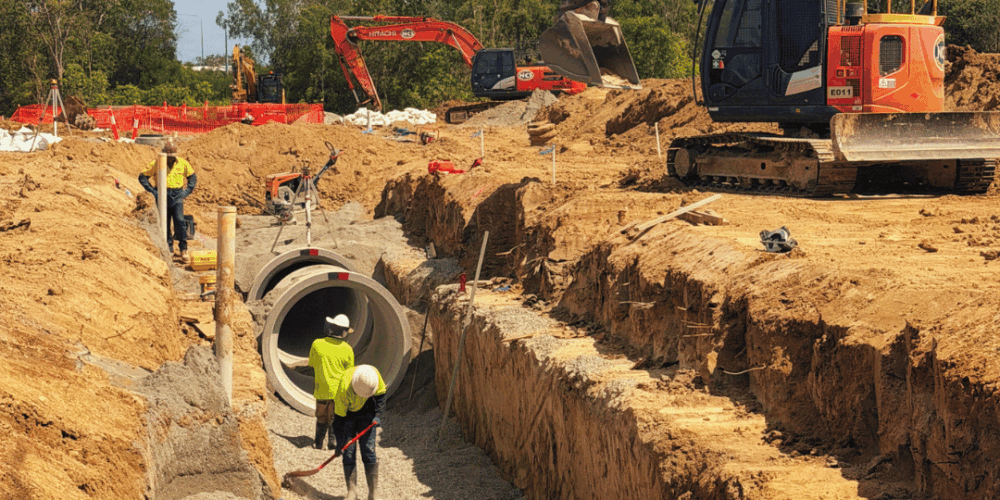
Roads, water, sewer, stormwater, telecommunications and transport networks all influence the viability and timing of a project. Capacity constraints, servicing upgrades and infrastructure agreements can introduce significant costs and delays if not identified early.
Many development opportunities are assessed primarily through planning controls and yield. Yet infrastructure frequently becomes the deciding factor in whether a project progresses efficiently or encounters challenges later in the process.
Good developments don’t simply respond to infrastructure requirements. They plan for them from the outset.
Every Site Exists Within A Community
Developments do not occur in isolation.
Neighbouring landowners, existing communities, community groups and future stakeholders all have interests in how an area evolves. While planning frameworks provide the formal assessment process, broader community expectations often influence how projects are perceived and how smoothly they progress.
Engaging with communities is often seen as a requirement to be managed. In reality, meaningful engagement can identify opportunities, concerns and local insights that strengthen project outcomes.
The most successful developments are not those that avoid stakeholder engagement. They are the projects that understand its value early.
Flooding, Environment and Natural Constraints Matter
Many sites contain physical characteristics that influence both approvals and delivery.
Flooding, stormwater management, bushfire considerations, environmental constraints and biodiversity requirements can significantly impact project design, staging and development costs.
In many cases these issues are manageable. The challenge is not necessarily their existence, but failing to understand them early enough.
Environmental constraints and offset obligations, for example, can affect infrastructure layouts, staging strategies and development footprints. Flooding can influence earthworks, drainage design and long-term maintenance obligations. Bushfire considerations can shape development outcomes in ways that are not immediately obvious during acquisition.
Understanding these factors early creates certainty later.
Transport Shapes Communities
Transport is often viewed as an engineering consideration, but its influence extends much further.
Access arrangements, road network upgrades, public transport connections, active transport opportunities and traffic impacts all influence how communities function and grow.
For governments, transport planning is often linked to broader infrastructure investment strategies.
For communities, it shapes accessibility and liveability.
For developers, it can influence approvals, costs and timing.
Projects that consider transport as part of a broader community outcome generally position themselves more effectively for long-term success.
Development Is Increasingly Collaborative
One of the biggest changes across the development industry has been the increasing number of stakeholders involved in the process.
Developers, councils, state government agencies, infrastructure providers, consultants, communities and investors all play important roles in shaping project outcomes.
Successful projects rarely result from a single organisation working independently.
They emerge through collaboration, communication and a shared understanding of project objectives.
While stakeholder expectations do not always align, effective coordination often helps reduce risk, improve certainty and create better outcomes for all parties involved.
Creating Better Communities Requires A Long-Term View
The most successful projects are not measured solely by the number of lots delivered or buildings constructed.
They are measured by the value they create over time.
Strong communities require infrastructure, transport networks, public spaces, environmental stewardship, employment opportunities and a clear vision for long-term growth. Achieving this requires balancing commercial realities with community outcomes and infrastructure planning.
It is a complex task, but it is also what makes development important.
At its best, development creates places where people want to live, work, invest and connect.
Final Thoughts The site may be where the development journey begins, but it is rarely where success is determined. Infrastructure constraints, stakeholder relationships, environmental considerations, transport planning and community expectations all play a critical role in shaping development outcomes. Understanding these challenges early, and approaching them with a practical and collaborative mindset, often creates the difference between a project that struggles and one that succeeds. At YEATS, we believe successful projects are built not only on strong sites, but on a clear understanding of the broader factors that influence growth, communities and long-term value.
Yeats Team X